By Roger Hughes | EMDR & Trauma-Informed Coach | UK-wide
16th December 2025
Readiness isn’t just about military threat — it’s about how our nervous system learns to stay vigilant long after the danger has passed.
When Britain’s military leadership talks about readiness, it’s easy to picture soldiers, ships, and jets. But the deeper meaning of readiness goes beyond uniforms and battalions. It’s about the state of alertness that lives in every cell. It’s about what happens when the body never lets go.
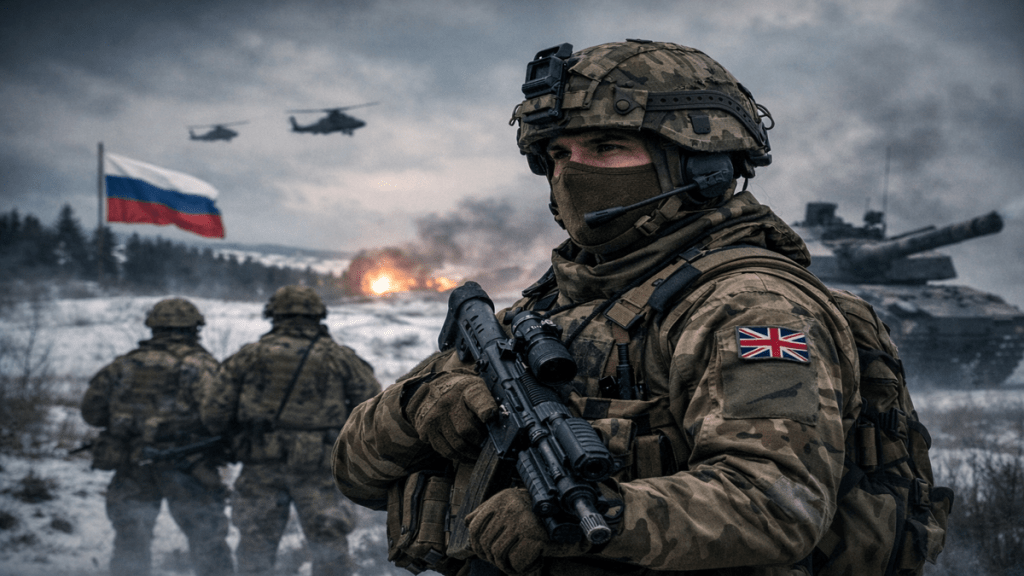
In a speech this week, Air Chief Marshal Sir Richard Knighton, the Chief of the Defence Staff, warned that Britain must be better prepared for the growing threat from Russia. Speaking at the Royal United Services Institute, he made it clear that the nation cannot rely on defence strategy alone. Society as a whole, he argued, needs to understand the risks and be ready to respond if necessary. He stated that “sons and daughters, colleagues, veterans … will all have a part to play” and called for a holistic approach to national resilience (Central FM).
This is serious geopolitical news. It reflects a shifting global landscape where war and peace are no longer clear‑cut states. As the new head of MI6, Blaise Metreweli, warned in her first public speech, the UK is entering an era of uncertainty — a “front line… everywhere” where threats may emerge through hybrid warfare, cyber disruption, and political sabotage that blur the boundary between conflict and calm (AOL).
For many people, this feels distant — something that unfolds on the news or sits within government briefings. But when viewed through a psychological lens, there is a striking parallel between this national message and the internal experience of trauma survivors.
When Readiness Becomes a Default
Trauma does not simply disappear once the event ends. The nervous system does not register peace just because time has passed. Instead, it records patterns of threat and survival. These patterns are stored in muscles, heart rate, eye movement, breathing rhythms, and reflex responses.
Soldiers on active deployment learn this kind of readiness quickly: check exits, scan surroundings, stay alert. Trauma survivors — whether shaped by combat, childhood abuse, assault, or long‑term neglect — live with a similar level of readiness every day, but without the option to stand down.
The brain’s survival centres do not operate through logic. They do not respond to reassurance or reasoned statements such as “you’re safe now.” They respond to felt experience. They remember what the body had to do to survive. Until those experiences are processed and resolved, the nervous system continues to interpret neutral situations as potential danger. The individual becomes their own sentry.
This is not a sign of weakness. It is adaptation. The system learned to protect. But long after the original threat has passed, it continues to do so — even when that protection is no longer needed.
This is precisely where EMDR therapy fits. Its purpose is not to deny history or erase memory, but to help the nervous system update its internal reality so the present is no longer treated as if the danger is still happening.
The Paradox of Readiness
At a national level, readiness functions as deterrence. The premise is that visible preparedness reduces the likelihood of attack. Strength discourages escalation.
In trauma recovery, the same concept becomes distorted. A nervous system that remains permanently deterrent‑ready does not prevent triggers — it amplifies them.
Readiness stops being protective and becomes cumulative. Tension builds. Hypervigilance sets in. Stress becomes chronic. And just like national defence strategy, it requires deliberate work to recalibrate.
Trauma and the Body’s Threat Network
When the body experiences harm, that experience is stored in neural networks. Neuroscience refers to this as implicit memory — memory that exists outside of language and conscious recall. A person can remember without being able to explain. These stored memories are activated by cues such as sounds, smells, facial expressions, or situations that feel similar to the past.
These triggers are not threats in themselves. They are reminders. The danger exists in the memory, not in the present moment.
EMDR allows the brain’s natural processing system to revisit these memories in a controlled and contained way. Through bilateral stimulation, both hemispheres of the brain are engaged, enabling emotional charge to soften and integrate. The memory remains, but its power changes.
This process is not about forgetting. It is about re‑contextualising — allowing the body to learn that the threat no longer exists.
Why Readiness Feels Permanent
When military leaders speak about readiness, they are addressing a collective awareness shaped by persistent global instability. Russia’s military posture, hybrid warfare tactics, and geopolitical pressure are not abstract ideas for governments. They are ongoing strategic realities.
For trauma survivors, readiness is also ongoing — but internal. It is the sense that danger could return at any moment. That vigilance is necessary. That standing down is unsafe.
Both national defence and trauma recovery share a core feature: the perception of ongoing threat keeps systems on alert. The difference is crucial. National readiness is external, strategic, and shared. Trauma readiness is internal, private, and often unconscious. One responds to present‑day risk. The other echoes past danger.
Moving from Survival to Presence
Healing is not about erasing experience. It is about down‑regulating threat responses. It is about helping the nervous system learn that what happened then is not happening now.
For someone with trauma, true readiness is not constant alertness. It is calm preparedness — the ability to respond when needed without living in fear of it. This kind of readiness is flexible. It is not frozen or defensive. It is present.
That is where growth becomes possible. A nervous system aligned with current reality, rather than past danger, allows life to expand again.
A Path Forward
You can remember what happened. You can honour what you survived. But you do not have to carry the charge forever.
Therapies that work directly with the brain and body — such as EMDR — allow the nervous system to relearn peace. Not as an idea, but as a felt reality.
Readiness does not have to mean reliving the past. It can mean standing steady in the present.
References
- Reuters — UK military chief urges Britain to better prepare for Russia threat:
https://www.reuters.com/world/uk/uk-military-chief-urges-britain-better-prepare-russia-threat-2025-12-15/ - Sky News — Everyone in UK must step up to deter Russian threat of wider war:
https://news.sky.com/story/everyone-in-uk-must-step-up-to-deter-russian-threat-of-wider-war-armed-forces-chief-warns-13483508 - AOL — MI6 head warns “the front line is everywhere”:
https://www.aol.com/articles/mi6-head-warns-front-line-104243833.html
📍 Where to Find Me Online
For trauma-informed EMDR therapy and coaching, I can be contacted via the following platforms:
- 🔗 Online EMDR Therapy UK – TherapyCounselling.org
- 🔗 Counselling.Network Profile – Roger Hughes
- 🔗 Psychology Today – Roger Hughes
- 🔗 The Coach Space – Roger Hughes
- 🔗 Google Business Profile – Roger Hughes
- 🔗 LinkedIn – Roger Hughes
- 🔗 EMDR Association UK – Verified Member Profile
- 🔗 Hub of Hope – Roger Hughes EMDR Therapy & Coaching
 Online EMDR Therapy UK | Accredited Trauma-Informed Therapist – Roger Hughes
Leave a comment