Thank you for being here. If something in this article resonates with you and you’d like to talk, you’re very welcome to get in touch. You can also browse other articles or return to the homepage if you’d like to explore more. And if you’d like to leave a comment or suggest a future topic, I’d genuinely love to hear from you. Now, on to the article.
Why Chatbots Can’t Heal Trauma — Human Presence Matters. The Comfort of Machines That Don’t Look Away
There’s a comfort in machines that don’t look away. A chatbot won’t flinch. Won’t judge. Won’t leave. It can feel like safety, especially if you’ve known dismissal, rejection, or silence in your most vulnerable moments. But something about that comfort is also a trap. It mimics presence without ever offering it. It simulates care without ever holding it.
Why It Sounds Like a Good Idea
AI has been sold as a solution to isolation. Always on. Always available. Non‑judgemental. With therapist waiting lists overloaded and services underfunded, it’s easy to see the appeal. You type into a chatbot, and it replies. You mention grief or fear, and it says kind things. No waiting room. No risk.
For someone with anxiety or trust issues, that feels safer. Controlled. Predictable. But healing isn’t predictable. Safety isn’t simulated. Regulation isn’t mechanical. We’ve created a cultural myth that talking is enough. That words, alone, can heal. But trauma isn’t a speech problem. It’s a body state. And bots can’t sit with a body.
What’s Actually Happening
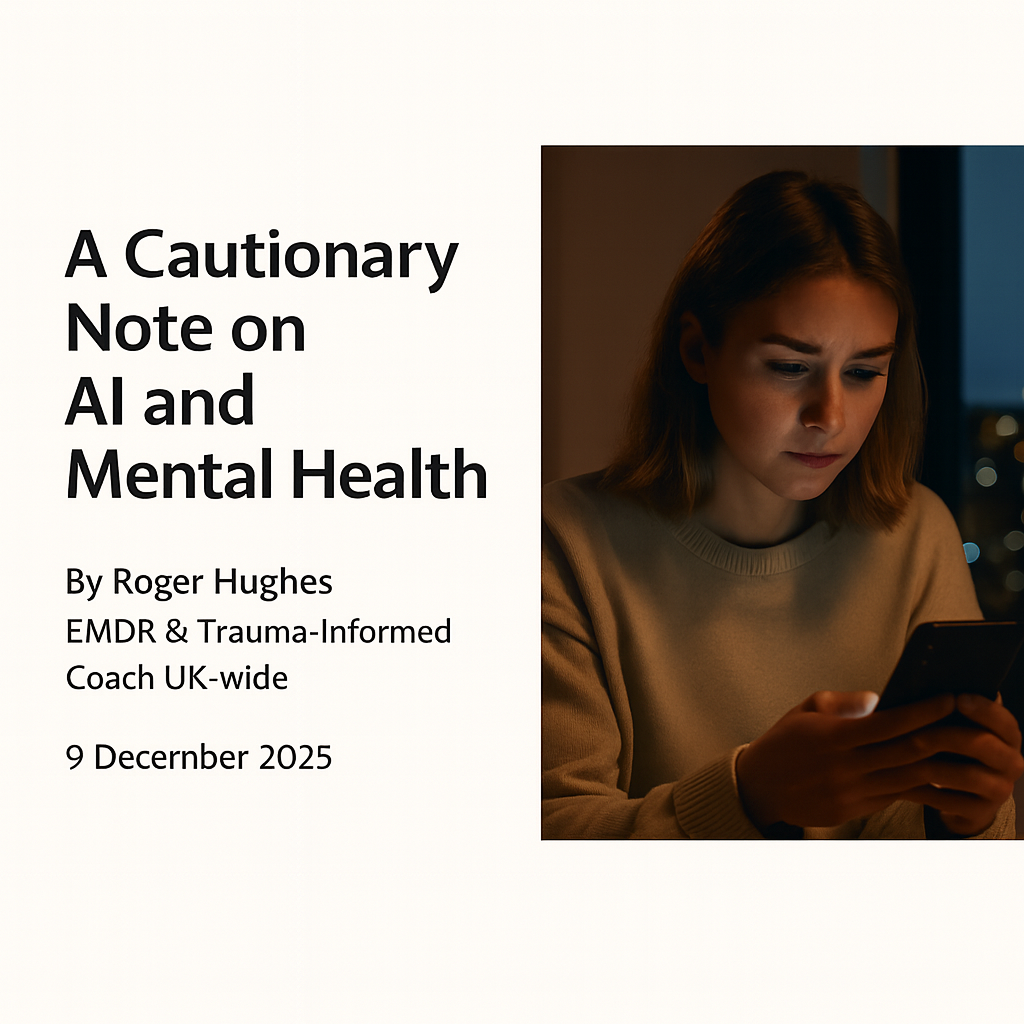
It can feel good to be heard, even by a bot. The words leave your mouth, or fingers, and you feel lighter. But nothing lands. No one is tracking your breath. No one hears the pause before you typed that sentence. No one notices the tremble, the silence, the switch.
That’s not a flaw in the software. It’s a limit of code.
Trauma healing depends on resonance. On someone else’s regulated nervous system staying present while yours wobbles. Bots don’t have a body. And they can’t lend you theirs. So the rupture remains. Unseen. Unheld. The illusion of connection delays the work. And for those already isolated, it deepens the loneliness.
Where This Comes From
We are living through a loneliness crisis. Healthcare is stretched. Therapy is expensive. Shame is common. And AI? It’s free. Patient. Easy to access. But it’s not neutral.
We’ve normalised disconnection and now outsource connection. For those who never knew safety with humans, bots feel safer. No judgment. No rupture. But also no attunement. No breath met by breath. No body meeting body.
And when trauma is involved, mimicry doesn’t heal. It distracts.
What It Looks Like Now
Clients describe long nights talking to bots. They say it helped. That they felt heard. And maybe they did. But they still come to therapy. Still flinch. Still dissociate at a touch. Because their body never learned to feel safe with another.
The bot didn’t retraumatise them. But it didn’t regulate them either. And that’s the gap. Their words were received by code — not by a human nervous system that can say: I’m here. I see you. You’re safe now.
What Starts to Shift
Healing begins when the body is met, not just the story. When someone shuts down and no one looks away. When silence is held, not filled. When flinching doesn’t scare someone off.
No chatbot does that. It doesn’t notice when your posture changes. Doesn’t ask what your sigh meant. Doesn’t wait.
But humans do. And that’s when people start to soften. When they stop performing. When they learn they can show up as they are.
The nervous system learns safety through another nervous system. That’s how we heal. Not through perfect words. But through quiet, shared presence.
The Line We Can’t Cross
This isn’t anti‑tech. It’s pro‑human. AI has its place. It can remind. Support. Scaffold. But it cannot attune.
If we pretend otherwise, we push people further from what they need. We mistake simulation for connection. We offer comfort that looks like healing, but isn’t.
And the harm isn’t immediate. It shows up in the therapy room. In the collapse. In the blank stare. In the survivor who thought they’d done the work, but still can’t feel safe.
We cannot outsource presence. We cannot code what must be felt. Trauma healing is slow. Embodied. Relational. And we need humans for that.
Conclusion: More Than Words
There is no replacement for presence. No shortcut around what must be felt with another. AI can be useful — as support, as information, as reminder. But it cannot regulate the body. It cannot sit with pain. It cannot co‑feel what was never named.
If you’ve shared with a bot and still feel alone, you’re not doing it wrong. You’re just being honest. This kind of work doesn’t happen in isolation. It happens in relationship.
You don’t need to explain why the words weren’t enough. But if you were wondering — this is why.
References
Therapists warn of dangers as children turn to AI for mental health advice
Over one in three using AI Chatbots for mental health support


Leave a Reply