By Roger Hughes | EMDR Therapist & Trauma-Informed Coach
10th December 2025
Thank you for being here. If something in this article resonates with you and you’d like to talk, you’re very welcome to get in touch. You can also browse other articles or return to the homepage if you’d like to explore more. And if you’d like to leave a comment or suggest a future topic, I’d genuinely love to hear from you. Now, on to the article.
Hope, Light, and the Deeper Meaning
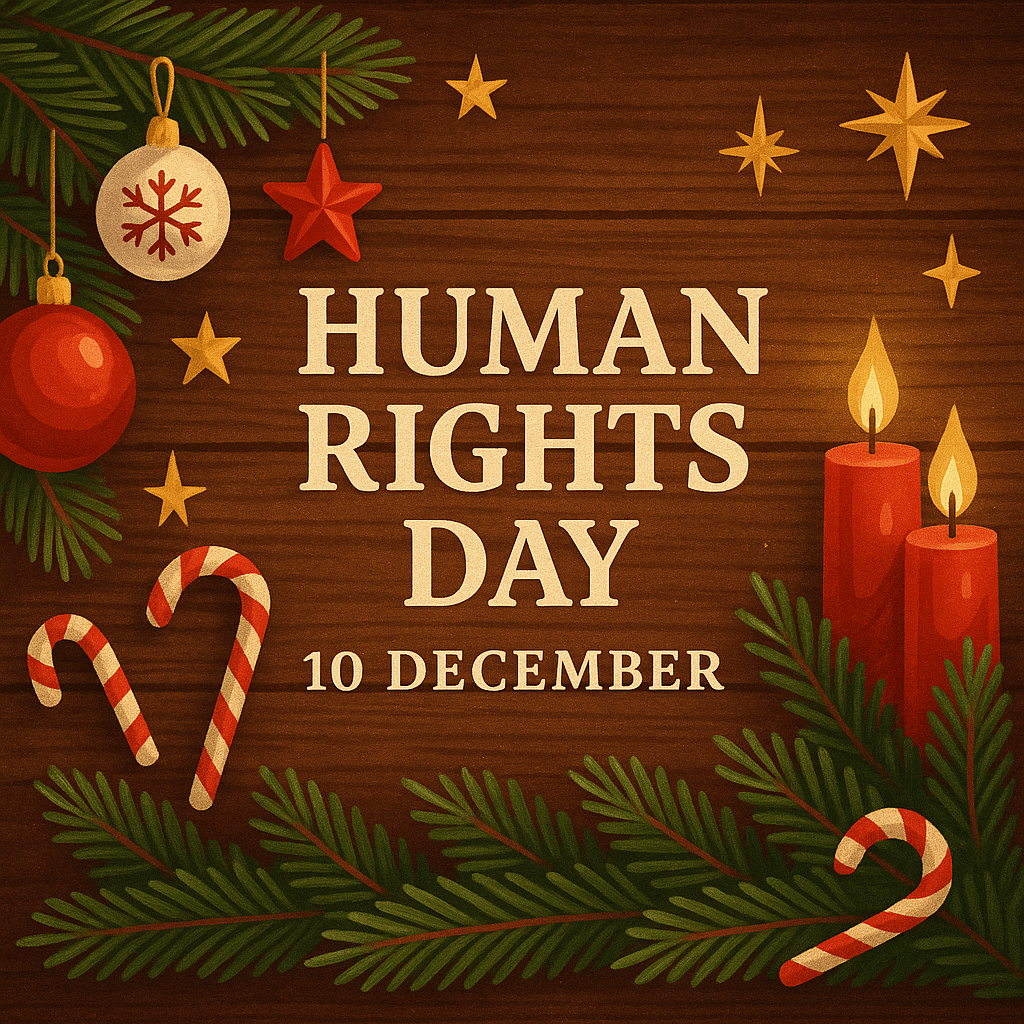
Something shifts in December. As lights go up and carols play, the pace of the world changes. There’s a pull towards cheer, towards tradition, towards the expected rituals. But tucked into this season, quietly, is December 10. Human Rights Day. A date that doesn’t get the spotlight. But it should. It speaks directly to something we rarely talk about: human rights at Christmas.
This day marks the anniversary of the Universal Declaration of Human Rights. Signed in 1948, it laid out something bold: that every human being deserves to live in dignity, safety, freedom, and equality. It sounds like law. It is. But it’s also something deeper. Something personal.
Because dignity isn’t a legal phrase when someone sits across from you in pain. Justice isn’t about courtrooms when it’s someone holding onto hope in the face of being dismissed. And freedom? That’s what it feels like when someone finally says out loud what they were never allowed to name.
December 10 isn’t about policy. It’s a mirror. A check-in. A quiet moment to ask: are we treating one another like we matter? Are we honouring the rights that make healing possible?
Why Human Rights Get Forgotten
The phrase “human rights” often lands flat. Abstract. Distant. It’s something we associate with global crises or courtroom debates. Not everyday life. Not something personal. And because of that, we stop seeing how deeply it applies to the work we do and the lives we lead.
We assume rights are for governments to protect, or lawyers to argue. But they show up everywhere. In the spaces where people feel seen. In the choices we make about how we treat one another. In the way someone is received when they speak their truth, or when they cry, or when they fall apart.
When rights are upheld, people soften. When they’re violated, even quietly, people learn to shut down. And that’s why this day matters. Because rights aren’t just written down. They’re lived. They’re dignity and presence in action.
And when the world is spinning too fast, or the holiday noise gets too loud, it becomes easier to forget the basics. To forget that someone’s silence might be fear. That someone’s distance might be exhaustion. That being human, at its core, is still sacred work.
What It Looks Like in Real Life
In healing spaces—therapy rooms, community groups, conversations between friends—these rights become real. The right to feel safe in your own home. The right to speak and be heard. The right to rest, to grieve, to grow. The right not to be afraid.
They aren’t extras. They’re the base layer. When they’re missing, it shows. It shows in bodies that tense before speaking. In eyes that scan the room for danger. In people who say, “I’m fine,” but aren’t.
And still, healing happens. Because presence is powerful. Because rights are more than ideals. They’re acts. The moment someone stays instead of turning away. The moment someone’s story is met with stillness, not solution. The moment someone says, “You’re allowed to feel that.”
December 10 isn’t just about remembering the declaration. It’s about living it. It’s trauma-informed holiday care in its most human form.
Where It Came From
The Universal Declaration of Human Rights was born in the aftermath of war. In a world reeling from brutality, it was a line in the sand: never again. But the vision wasn’t just to prevent harm. It was to create the conditions where people could thrive.
Dignity. Equality. Freedom. These weren’t lofty concepts. They were the antidote to what had been lost.
And as the years passed, that vision expanded. From international law to national policy. From civil rights to mental health. From courtrooms to clinics. The core remained: every person has worth. Every person deserves safety.
But we forget. Systems stretch. Budgets cut. Compassion burns out. And soon, the promise becomes paperwork. Which is why we need reminders. Not in the form of speeches, but in lived practice. In how we meet each other across the table. In how we carry emotional safety in December.
Why It Still Matters
Right now, we’re watching stories play out that test this promise. People denied care. People dismissed for how they look, speak, or feel. Communities fractured. Systems overwhelmed. The weight of it is felt in therapy rooms, in classrooms, in homes.
When people say they feel unseen, it’s not just poetic. It’s accurate. And when people feel seen, things change.
That’s what makes December 10 relevant. Not because it asks us to be political, but because it asks us to be human. To notice the ways we strip others of dignity without realising. To notice the ways we’ve stopped offering each other space to be whole.
In a season that often demands perfection, Human Rights Day invites presence. To remember that behind every face in the crowd is a person with rights that matter. Rights that are still worth protecting. Especially now.
What We Can Still Do
We pause. We choose presence. We choose to honour dignity when it’s easiest to forget. Human rights at Christmas aren’t just legal ideals—they’re in the way we greet one another, the way we respond to distress, the way we choose not to look away.
Small acts become anchors. Holding eye contact a little longer. Listening without fixing. Choosing language that respects instead of minimises. Saying, “I believe you” without hesitation. Giving someone room to breathe. Holding back judgment.
This isn’t about being perfect. It’s about being willing. Willing to see. Willing to pause. Willing to honour that everyone you meet is carrying something. Willing to carry light without needing to shine.
Kindness is not weakness. Dignity is not soft. Justice isn’t abstract. These are the things that thread humanity together. And they don’t need a date to be valid. But December 10 offers a moment to remember.
What Still Holds
You don’t need a campaign. Just a moment. A breath. A choice to stay open. A choice to return to what’s real.
Human Rights Day and Christmas aren’t separate things. Both call us to notice who’s struggling. To slow down. To treat each other like we matter. Because we do.
The season will pass. The lights will come down. But what remains is how we held each other in the middle of it. Not with answers, but with presence. Not with performance, but with care.
Because the real gift is not being fixed. It’s being seen, and still welcomed.
References
Human Rights Day | United Nations
Universal Declaration of Human Rights | United Nations
Human Rights Day 2025: Today, Check Theme and What are Everyday Human Rights Essentials
Leave a Reply